
(1.4) Musical Instrument Tone
There is a huge variety of musical instruments and sounds, as you would already know from your experience with music. Even two instruments playing the same note can sound very different.
This is because a musical instrument produces a sound wave which is a combination of different but related frequencies (known as harmonics) which all mix together to create the distinctive tone or voice of the instrument.
The lowest frequency is usually dominant, and you perceive this one as the pitch. The combination of the other harmonics provides the distinctive shape of the waveform, and thereby the distinctive tone of the instrument.
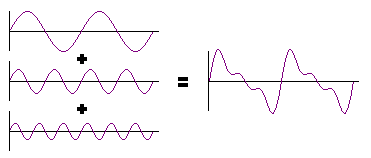
The piano and trumpet each contain different combinations of harmonics, and therefore sound different to the guitar, even when they are all playing a single note of the same pitch.

|
Topic 8 of 117
| ||
Bring these music concepts to life with the free Songtrix Bronze Edition as you create songs from chords and scales.
Then publish and share your ideas with the other musicians you meet on the ChordWizard Network.
Have questions? Join the ChordWizard Network and post them in the Music Theory forum for answers and discussions on your topics of interest.