

(1.6) Doubling Frequency
Something very interesting happens when you double the frequency of a note. The pitch of the doubled frequency sounds higher, but somehow the same as the original note, while the pitches of all frequencies in between sound quite different.
Lets use the pitch of frequency 440 Hz as an example. It is the note A, as mentioned earlier. The pitch of frequency 880 Hz is higher, but sounds like the same note.
It seems strange, but there is a logical reason for this similarity. The sound waves below show us that two cycles of the 880 Hz frequency fit exactly in the space of a single cycle of the 440 Hz frequency.
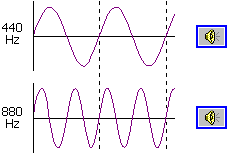
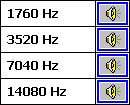
If we keep doubling this frequency, we find that all of the resulting pitches sound similar, except that each one is higher than the last. In fact, they are all the note A, just like the original, but they are all one octave apart from each other.
|
Topic 10 of 117
| ||
Bring these music concepts to life with the free Songtrix Bronze Edition as you create songs from chords and scales.
Then publish and share your ideas with the other musicians you meet on the ChordWizard Network.
Have questions? Join the ChordWizard Network and post them in the Music Theory forum for answers and discussions on your topics of interest.