

2) The Major Scale
A scale is a collection of notes, selected from the full set of notes in an octave. The choice of notes in the scale provides the framework on which a piece of music is built.
We have already been introduced to the Chromatic scale. It is very rarely used as the basis for a piece of music, because it excludes no notes, and so provides no structure.
The importance of the Chromatic scale is that it defines the full set of notes in music, from which all other scales are built.
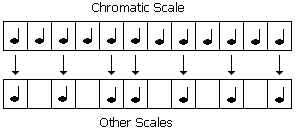
There are many different types of scales, and we will look at all of them in detail later. To begin with, we are going to meet the most important scale in western music, the Major scale.
|
Topic 17 of 117
| ||
Bring these music concepts to life with the free Songtrix Bronze Edition as you create songs from chords and scales.
Then publish and share your ideas with the other musicians you meet on the ChordWizard Network.
Have questions? Join the ChordWizard Network and post them in the Music Theory forum for answers and discussions on your topics of interest.