
(2.1) Scales and Music Structure
A scale type is defined by the particular pattern of semitone intervals between its notes, which gives it a characteristic sound.
Other scale types have different patterns of intervals, giving each of them a different characteristic sound.
Most scale types have between five and eight notes in them, with seven notes being the most common. Some examples are shown below.
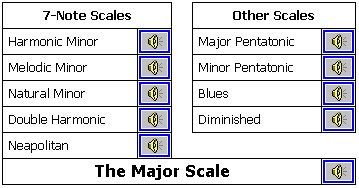
The seven-note Major scale is such a dominant force in western music that it provides the foundation for the naming of notes and chords, even with music using different scale types.
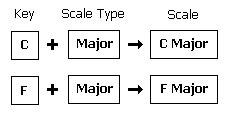
When a scale type is played from a particular starting note (also known as the root or key note) it becomes a scale. Scales of a certain type may contain 12 different sets of notes, depending on this starting note.
The scale of a song defines its melodic structure, by identifying which notes can be used in the melody (or tune) of the song.
The scale also strongly influences the harmonic structure of a song, because these same notes are generally used for building chords to accompany the melody.
This is not a fixed rule, and many songs use notes outside of their scale, but these are considered to be exceptions. They are called accidental notes, and in sheet music they are specially marked to show that they do not belong to the scale.
|
Topic 18 of 117
| ||
Bring these music concepts to life with the free Songtrix Bronze Edition as you create songs from chords and scales.
Then publish and share your ideas with the other musicians you meet on the ChordWizard Network.
Have questions? Join the ChordWizard Network and post them in the Music Theory forum for answers and discussions on your topics of interest.