

3) Chords and Harmony
Music sounds a little empty if notes are only played one at a time. It is the interaction between different notes played together that gives music its richness and color.
Playing more than one note at the same time is called harmony. The difference in the pitch between two notes is called their interval, a word we used earlier to describe the separation of notes in the Major scale.
The richness and variety of harmony multiplies with each extra note. Two-note harmonies have one interval. Three-note harmonies have three intervals, between each note and each other. Four-notes harmonies have six intervals, and so on.
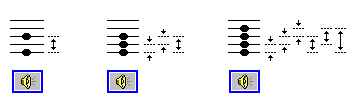
With some intervals, notes blend naturally together to create a pleasing or consonant sound. Other intervals create a more jarring or dissonant sound. Both consonant and dissonant intervals are used in music, ideally in a balanced way.
Too much consonance in music makes it easy to listen to, but a little bland. Dissonance adds a powerful tension, but too much can make music hard to connect with.
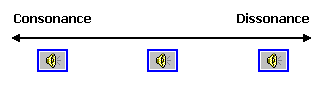
Harmonies with three or more notes are called chords and they provide the harmonic structure or background mood of a piece of music. Intervals are the building blocks of chords.

Most ChordWizard products contain a collection of standard chord types, including those in this topic, and provide powerful tools for working with chords of all types.
These include tools for exploring how chords are played on your instrument, identifying the names of chords you have discovered, and printing chord book reports.
|
Topic 30 of 117
| ||
Bring these music concepts to life with the free Songtrix Bronze Edition as you create songs from chords and scales.
Then publish and share your ideas with the other musicians you meet on the ChordWizard Network.

Have questions? Join the ChordWizard Network and post them in the Music Theory forum for answers and discussions on your topics of interest.