
(3.6) Triad Chords
Chords can be naturally divided into families of related chords based on a particular triad.
A triad is a three-note chord that provides a foundation of harmony. Other notes can be added to a triad to form other chords.
Many triads are common chords in their own right, while others tend to appear more often as the basis for other chords.
We have already been introduced to the major triad, which is the most common of all.

Although we use the symbol maj throughout these tutorials, it is such a basic chord that it is often referred to by the root note only. For example the Cmaj chord is often called simply C.
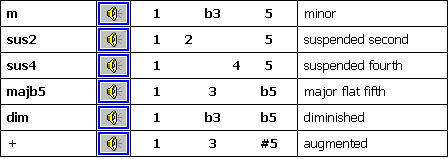
There are several other triads, and each has a different combination of degrees, giving them a different characteristic sound.
Here are the symbols, formulas and names of the other common triads, for comparison.
|
Topic 36 of 117
| ||
Bring these music concepts to life with the free Songtrix Bronze Edition as you create songs from chords and scales.
Then publish and share your ideas with the other musicians you meet on the ChordWizard Network.
Have questions? Join the ChordWizard Network and post them in the Music Theory forum for answers and discussions on your topics of interest.