
(3.7) Chord Note Naming
Some of the triads in the previous topic raise an issue we need to consider when naming the notes in a chord.
We know that the maj chord is made up from the degrees 1, 3 and 5, so we can just use the names that these notes have in the Major scale.
In this way, we can work out that the names of the notes in the Cmaj chord are C, E and G - these being the 1st, 3rd and 5th notes of the C Major scale.
However, what do we call the middle note in the Cm chord? This is made from a ♭3 degree, which doesn't appear in the Major scale. Should it be called D♯ or E♭?
As you might suspect, we take our cue from the name of the degree. The third note of the C Major scale is called E, so the ♭3 degree is called E♭, not D♯.
The notes of other triad chords on a C root note are shown below:
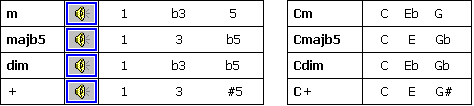
The same applies for other root notes, and it can result in strange note names, for example with the chord B+.
The 1st, 3rd and 5th notes of the B Major scale are B, D♯ and F♯, so by sharpening the fifth note, we find the notes of the B+ chord are B (=1) D♯ (=3) and F♯♯ (=♯5).
You will often see double sharps and flats in the names of chord notes like this, and it does take a little getting used to.
However, when you understand the logic behind it, you should see that the name F♯♯ contains valuable information about the role of that note within the chord, which you lose if you simply call it G.

In ChordWizard products, when strict note naming is active, the names of the notes within chords are automatically chosen to suit the name of the root note.
|
Topic 37 of 117
| ||
Bring these music concepts to life with the free Songtrix Bronze Edition as you create songs from chords and scales.
Then publish and share your ideas with the other musicians you meet on the ChordWizard Network.
Have questions? Join the ChordWizard Network and post them in the Music Theory forum for answers and discussions on your topics of interest.