
(3.9) Other Major Chords
Many other chord types can be formed from the major triad, using other degrees, or a combination of harmonic and other degrees. These are listed below.
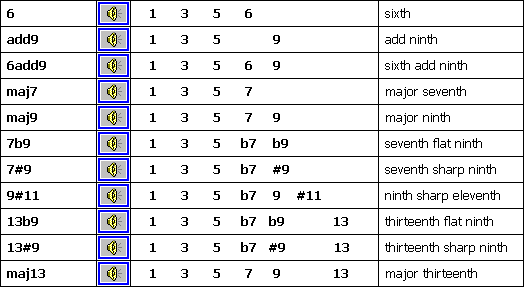
The names of these chord types tend to be based on how their degrees differ from their closest harmonically extended chord type.
For example, the seventh sharp ninth chord (7♯9) chord differs from the dominant seventh chord (7) only in the addition of the extra ♯9 degree.

Most ChordWizard products use the concept of required degrees in the definitions of chord types. Required degrees of a chord type must be present in a group of notes for them to be identified as a chord of that type.
The required degrees of the standard chord types are carefully chosen. For example, the 7♯9 chord type has ♯9 as a required degree.
|
Topic 39 of 117
| ||
Bring these music concepts to life with the free Songtrix Bronze Edition as you create songs from chords and scales.
Then publish and share your ideas with the other musicians you meet on the ChordWizard Network.
Have questions? Join the ChordWizard Network and post them in the Music Theory forum for answers and discussions on your topics of interest.