
(4.2) Natural Minor Scale
While the Major scale is considered the foundation of western music theory, the next most important is probably the Natural Minor scale, also known as the Pure Minor or Aeolian scale.
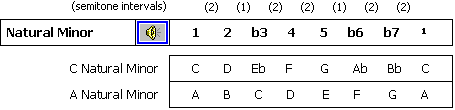
The terms major and minor are essential concepts in music, and as with chords, they arise from the third degree of the scale.
All major scales and chords include a major third degree (four semitones), giving them a strong, assertive feel. All minor scales and chords include a minor third degree (three semitones) instead, giving them a gentle, melancholy feel.

When the Major scale was introduced earlier, you may have wondered why the key of C has the special privilege, compared to the other keys, of containing only natural notes. Why not for example, the key of A, which is our first alphabetical letter?
Also, why do single semitone intervals occur only between B/C and E/F, while there are two semitones between all the other natural notes?
It seems that centuries ago, when letters were first given to notes, the Natural Minor scale was considered the most important. Note letters were therefore allocated to suit the intervals of the Natural Minor scale.
As you can see above, this means that the A Natural Minor scale contains all natural notes, the same as the C Major scale. The Natural Minor scales with other root notes all have at least one sharp or flat note.
This makes a lot more sense. It also offers insight why it has the name of 'Natural' minor, compared to the other minor scales, which have different names, and different patterns of intervals.
|
Topic 48 of 117
| ||
Bring these music concepts to life with the free Songtrix Bronze Edition as you create songs from chords and scales.
Then publish and share your ideas with the other musicians you meet on the ChordWizard Network.

Have questions? Join the ChordWizard Network and post them in the Music Theory forum for answers and discussions on your topics of interest.