
5) Meter and Rhythm
We have now explored the basis of harmony and melody in music, but there is a third essential element - rhythm - that we have not yet covered.
Music is an art form that is instrinsically based on the passing of time, unlike static arts such as painting or sculpture, which exist in their entirety at every instant.
Perhaps this one of the reasons why music appeals so broadly to so many people. It is dynamic, and like our own lives, it is constantly changing and unfolding, creating a story as it develops.
Music shares this characteristic with other art forms such as film or drama. But it stands alone in the extent to which it is governed by precise lengths of time, and the sophistication with which these must be expressed to truly capture a piece of music.
So far, when displaying staff notation, we have largely ignored the issue of timing. For example, we would present the melody of Twinkle Twinkle Little Star like this:

In fact, this is only a shorthand sketch of the melody, because it includes no timing information. To describe it completely and accurately, it would have to be notated more like this:

This tutorial explains the concepts of musical rhythm and timing, and the staff notation symbols that are used to represent them.

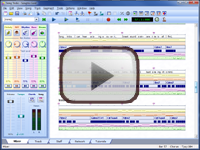
ChordWizard products such as Songtrix prepare the staff notation of a piece of music for you automatically.
As you edit or record the musical events that make up your song, Songtrix updates the layout of Staff View so you can see immediately the effect of any changes.
You can also use a Staff Sheet report to print your staff layout.
|
Topic 59 of 117
| ||
Bring these music concepts to life with the free Songtrix Bronze Edition as you create songs from chords and scales.
Then publish and share your ideas with the other musicians you meet on the ChordWizard Network.
Have questions? Join the ChordWizard Network and post them in the Music Theory forum for answers and discussions on your topics of interest.