
(6.3) Other Scale Tone Chords
The family of related scale tone triads in the previous topic can be extended with an extra note.
This provides us with another series of related four-note chords, which have a richer, more sophisticated sound.
Still using the C Major scale, we get the chords Cmaj7 (= C+E+G+B), Dm7 (= D+F+A+C), Em7 (= E+G+B+D) and so on. Notice the high profile of the seventh in these chord names.
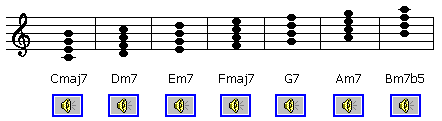
We can also repeat this process for five-note chords. This time the ninth (or the ♭9 variant) degree appears in all of these chords.
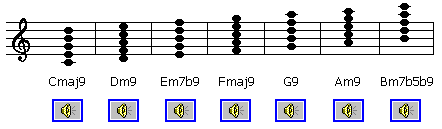
Many of the unusual extended chords introduced earlier originate from this process of building chords on alternate scale tones.
|
Topic 73 of 117
| ||
Bring these music concepts to life with the free Songtrix Bronze Edition as you create songs from chords and scales.
Then publish and share your ideas with the other musicians you meet on the ChordWizard Network.
Have questions? Join the ChordWizard Network and post them in the Music Theory forum for answers and discussions on your topics of interest.