
9) Writing Songs
Composing and songwriting are both the process of creating new music. They are essentially the same thing, but composition tends to mean instrumental or classical works, while songwriting is more contemporary music with lyrics.
Composing is, in many ways, the ultimate expression of your musicianship. Depending on how involved your composition is, it can be the most demanding, and rewarding, musical activity you will ever undertake.
The first inspiration for a piece of music can take many forms, and every composer or songwriter has a different technique to get from the inspiration to the completed piece of music.
However, all musical creations share four main aspects of composition which need to be developed along the way. These can be shown in a hierarchy, each supported by the one underneath it.
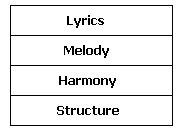
1. Lyrics - These are the words of the song. Obviously this is missing in instrumental music. Lyrics are usually sung and so require a melody, except in styles such as rap, where the lyrics are spoken.
2. Melody - This is tune, or main theme, of the music, which tells the musical 'story'. While it is often considered the essence of a musical creation, the melody sounds incomplete without harmony behind it.
3. Harmony - This is progression of the chords in the music, which provides the distinctive background for the melody, giving it strength and context. It is a crucial element of any composition.
4. Structure - This is how the sections of a song are arranged around each other. It often involves the repetition of familiar themes in verse and chorus sections to create a consistent but varied dynamic throughout the song.
Finding and developing original musical ideas is a constant challenge, even for advanced musicians and experienced composers.
This tutorial looks at all four aspects of composition shown above, with a particular focus on melody and harmony, and the tools that music theory offers you to make the creative process richer and easier.
Underlying many of these tools is the concept of chord and scale relations, so make sure you have understood the earlier tutorial which covers this concept.
|
Topic 107 of 117
| ||
Bring these music concepts to life with the free Songtrix Bronze Edition as you create songs from chords and scales.
Then publish and share your ideas with the other musicians you meet on the ChordWizard Network.
Have questions? Join the ChordWizard Network and post them in the Music Theory forum for answers and discussions on your topics of interest.